Semrush Organic Rankings 2.0 Review: 4 Bugs & Why It Shows 0 Traffic (2026)
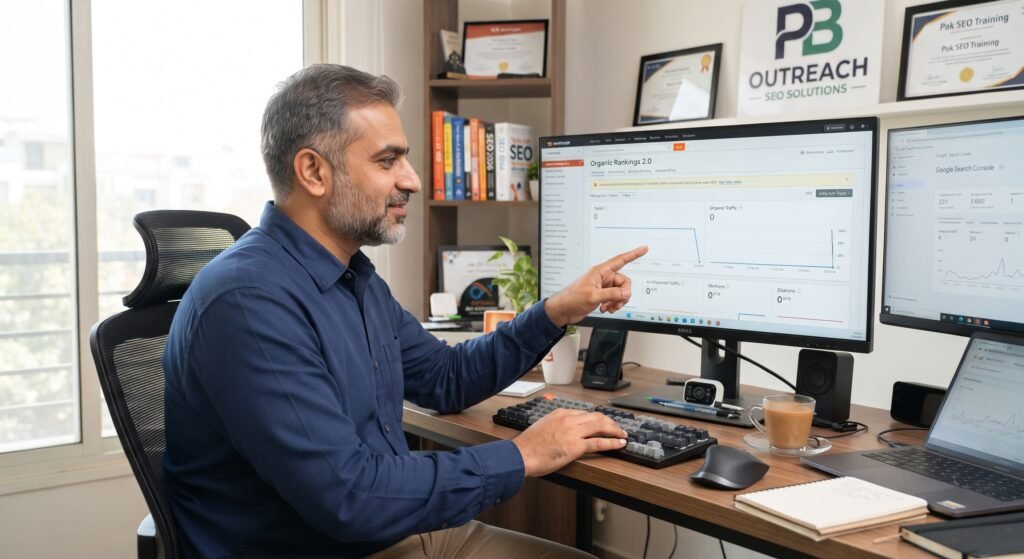
Quick Answer: Semrush Organic Rankings 2.0 is a beta upgrade that tracks traditional Google rankings alongside AI Answer Engines (ChatGPT, Gemini, Google AI Overviews). If your site shows 0 Topics or zero traffic, it is usually due to limited beta database coverage or the hidden “Only Safe Topics” filter enabled by default. Always verify your actual clicks in Google Search Console before sending reports to clients.
If you recently opened Semrush and noticed your organic traffic graphs plummeting to zero, do not panic. Semrush has officially rolled out its next-generation database update: Organic Rankings 2.0. Designed to measure visibility across both traditional search engines and AI answer engines, this tool introduces a completely new framework for tracking search presence.
I have been practicing AI SEO and traditional search engine optimization since 2006. As founder of PB Outreach and CEO of Pak SEO Training, I have tested every major algorithm shift and tool overhaul. In this hands-on review, we will break down how the new 2.0 system works, unpack 4 major bugs causing inaccurate metrics, and look at how to use this tool safely without panicking your clients.
What’s New in Semrush Organic Rankings 2.0? (The 4 AI Metrics)
Traditional SEO reporting focused heavily on ranking positions for exact search queries. Semrush 2.0 shifts this paradigm by tracking how generative models cite, mention, and source your content across AI platforms like OpenAI ChatGPT, Google Gemini, and Perplexity.
To capture this hybrid search environment, Organic Rankings 2.0 introduces four distinct metrics:
- Topics (Replacing Single Keywords): Instead of counting individual keyword variations separately, 2.0 clusters semantic keywords into unified “Topics.” If you rank for 10 long-tail variants of the same concept, Semrush now groups them into a single Topic entity.
- AI-Influenced Traffic: An estimated volume metric measuring indirect traffic driven to your brand after users discover your site in AI-generated answers or conversational summaries.
- Mentions: The frequency with which large language models (LLMs) output your brand, domain, or product name within chat responses, regardless of whether a clickable link is included.
- Citations: Direct hyperlinked citations provided in AI search cards or footnote links within AI Overviews. To maximize these citations, check our guide on how to build an llms.txt file in 2026.
4 Major Bugs & Mistakes in Organic Rankings 2.0 (And How to Fix Them)
While the vision behind Organic Rankings 2.0 is solid, the current beta rollout contains several glitchy mechanisms that cause massive head-aches for agency owners, freelancers, and site owners.
1. Active Sites Showing “0 Topics” & “0 Organic Traffic”
Many active, high-traffic websites are currently displaying zero traffic and zero topics in the new interface. This occurs because the 2.0 beta database currently prioritizes high-volume US and UK regional indexes, temporarily dropping regional database syncs for smaller regions or lower-authority domains.
The Fix: Toggle the interface back to “Classic Organic Research” in the top navigation bar, or cross-verify domain performance using our free Website Traffic Checker to confirm real-world performance.
2. The Hidden “Only Safe Topics” Filter
Semrush introduced a safety filter designed to prevent sensitive content from clogging reporting dashboards. By default, the “Only Safe Topics” toggle is switched ON. This automatically hides ranking data for sites operating in niches such as finance, crypto, health, dating, supplements, and adult entertainment.
The Fix: Look at the top filter bar in the 2.0 dashboard, click on Filters, and disable “Only Safe Topics” to reveal your hidden keyword data.
3. Traffic Estimates Are 60%–70% Lower Than Legacy Reports
If your traffic curve looks like it fell off a cliff, you are not alone. Semrush 2.0 applies an aggressive click-through-rate (CTR) penalty model that accounts for zero-click searches caused by Google AI Overviews. As a result, estimated traffic numbers appear 60% to 70% lower than legacy Semrush reports and actual Google Search Console data.
The Fix: Understand that this is a mathematical modeling change, not an actual loss of real visitors. Educate your clients before sending automated PDF updates.
4. Date & Database Sync Glitches
During the live 2.0 migration, cached data often fails to align. You may notice historical monthly snapshots showing conflicting keyword counts when switching between weekly and monthly view modes.
The Fix: Clear your browser cache and force a manual refresh of the project dashboard. If discrepancies persist, export the raw CSV dataset for manual verification in Google Sheets.
Semrush Organic Rankings 2.0 vs. Classic Organic Research
Here is a direct side-by-side comparison between the legacy system and the new 2.0 beta framework:
| Feature / Metric | Classic Organic Research | Organic Rankings 2.0 (Beta) |
|---|---|---|
| Primary Focus | Exact-match keyword rankings in Google SERPs | Topic clusters & AI answer engine visibility |
| AI Visibility Tracking | None (Google SERPs only) | Tracks AI Mentions, Citations, & AI Overviews |
| Database Coverage | Full global database across 140+ countries | Limited US/UK beta rollout database |
| Traffic Accuracy | Standard desktop/mobile CTR estimations | Aggressive zero-click AI model (60%-70% lower estimates) |
| Best Use Case | Client monthly reporting & exact keyword tracking | Analyzing AI citation trends & GEO performance |
How Freelancers & Site Owners Should Use This Tool Safely
For Pakistani digital marketers and global freelancers, automated reporting tools can make or break client relationships. Sending a 2.0 PDF report showing a sudden 70% traffic drop to a non-technical client will only trigger unnecessary panic.
Follow these standard practices to navigate the 2.0 rollout smoothly:
- Rely on First-Party Data: Never use Semrush 2.0 traffic estimates as a primary measure of revenue or lead performance. Always rely on Google Search Console and Google Analytics for actual clicks and conversions.
- Educate Your Clients: If you run a link-building agency, explain to clients how link building agencies work when adapting to new AI metrics. Show them that ranking zero-click topics still builds domain entity authority.
- Audit Prospects Carefully: Before pitching guest posts or link insertions, evaluate target sites across both legacy and 2.0 databases. Check our flexible Link Building Packages to secure safe, high-authority placements that thrive in both traditional and AI search ecosystems.
Final Verdict: Is Semrush Organic Rankings 2.0 Worth Using?
Semrush Organic Rankings 2.0 is an ambitious step forward into Generative Engine Optimization (GEO). Its ability to map brand citations and topic clusters across LLMs makes it an essential tool for the future of search analytics.
However, in its current beta state, the tool is prone to false zero-traffic bugs, aggressive CTR modeling, and database coverage gaps. Use 2.0 primarily for tracking AI citations and topic trends, but keep Classic Organic Research and Google Search Console active for accurate client reporting.
Frequently Asked Questions
1. Why does Semrush 2.0 show 0 traffic?
Your site showing zero traffic is usually caused by two main factors: either your domain is not yet indexed in the new 2.0 regional beta database, or the default “Only Safe Topics” filter is actively hiding your ranking keywords.
2. What is AI-Influenced Traffic in Semrush?
AI-Influenced Traffic is an estimated metric that calculates potential visits driven to your site after users see your brand cited, summarized, or recommended inside AI platforms like ChatGPT, Gemini, and Google AI Overviews.
3. Should I trust Semrush 2.0 over Search Console?
No. Semrush 2.0 relies on estimated mathematical models that adjust heavily for zero-click AI searches, whereas Google Search Console remains the definitive source of truth for actual impressions and clicks coming from Google Search.
4. How do I fix hidden Semrush 2.0 topics?
You can reveal hidden ranking topics by locating the “Only safe topics” toggle above the main data table and switching it off. This forces Semrush 2.0 to display keywords in sensitive niches like finance, health, dating, and cryptocurrency.
5. Why is Semrush 2.0 traffic lower than before?
Semrush updated its Click-Through Rate (CTR) formula in version 2.0 to account for zero-click answers and AI Overviews. As a result, estimated traffic numbers often appear 60% to 70% lower than what you see in the classic Organic Research report.

Muhammad Amjad Butt
SEO Trainer, CEO & Founder of PB Outreach
Muhammad Amjad Butt is an SEO specialist from Faisalabad, Pakistan, practicing SEO since 2006. He is the CEO and founder of PB Outreach and the trainer behind Pak SEO Training. He has trained 500+ students and completed 1,000+ guest posting projects for clients.
📚 Related Posts

How Link Building Agencies Work in 2026 (With Real Agency Case Study)
Discover how link building agencies work behind the scenes—from outreach and publisher networks to pricing. Includes a real case study on Interamplify…
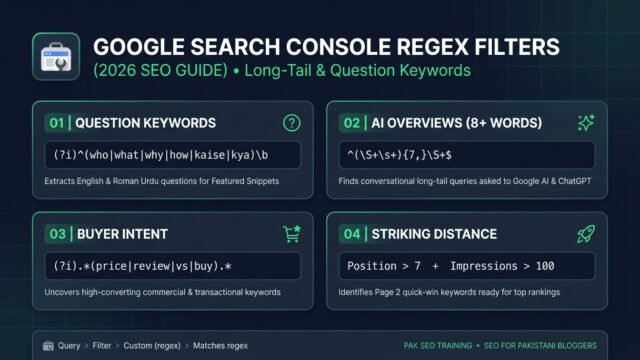
Google Search Console Regex Filters: Find Long-Tail Keywords (2026)
• Learn how to use Google Search Console regex filters to extract long-tail, question, and AI Overview keywords with copy-paste formulas and…
Reddit Post Auto-Deleted in Seconds? Why Posts Get Instantly Removed in Pakistan (2026 Fix & SEO Guide)
Reddit post foran delete ho jati hai? Learn why Reddit's automated filters & CGNAT block Pakistani accounts in 2026 and follow our…