What Is a Listicle? Why It Is Vital for Your SEO Strategy (With Real Examples)
Answer
A listicle is an article built around a numbered or bulleted list that breaks a topic into short, scannable sections. The listicles meaning is simple: “list” plus “article.” In listicles SEO, this format earns higher click-through rates, wins Google Featured Snippets, keeps readers on the page longer, and attracts natural backlinks, which makes it one of the strongest content formats for blogs, link building campaigns and ecommerce stores.
Key Points
- Listicles meaning: A list-based article that splits complex topics into bite-sized points.
- Three core types: Unranked collections, ranked lists and sequential step-by-step guides.
- Listicles SEO benefits: Higher CTR from numbered headlines, Position 0 featured snippets and lower bounce rates.
- Listicle link building: “Best of” and “Top tools” lists naturally attract links and inclusion requests.
- Listicle ecommerce: Product roundups and gift guides guide buyers toward a purchase decision.
- E-E-A-T: Real data, expert insight and first-hand testing turn a simple list into trusted content.
What Is a Listicle? Listicles Meaning Explained
Digital reading habits have changed. Most online readers no longer read a page line by line from start to finish. They scan headings, jump to the section that answers their question, and leave once they have what they need. This behavior is exactly why the listicle has become one of the most effective, highest-converting content formats for publishers, content marketers and SEO strategists.
So, what is a listicle in plain terms? The word is a blend of “list” and “article.” Instead of a long narrative essay that demands continuous reading, a listicle organizes information into numbered or bulleted points, each with its own subheading and short explanation. If you are wondering about the listicles meaning in a marketing context, it refers to any content piece where the list itself is the backbone of the article, not just a small part of it.
For websites focused on growing organic traffic, reducing bounce rates and building domain authority, such as sthint.com, understanding list-based content is no longer optional. It is a core part of a modern content strategy.
How to Define Listicles by Structure
The easiest way to define listicles is by how their items are ordered. Most list articles fall into one of three categories:
- Unranked collections: A group of related items where order does not reflect quality. Example: 15 Great Ideas for Home Office Decor.
- Ranked lists: Items sorted by performance, quality or preference. Example: Top 10 Best SEO Plugins for WordPress, Ranked.
- Sequential workflows: Steps in an exact order that readers must follow. Example: 7 Steps to Launch Your First Ecommerce Store.
Whichever type you choose, putting a clear number in the headline tells readers how long the content is and what value they will get before they even click.
Listicles SEO: Why Search Engines Keep Rewarding Lists
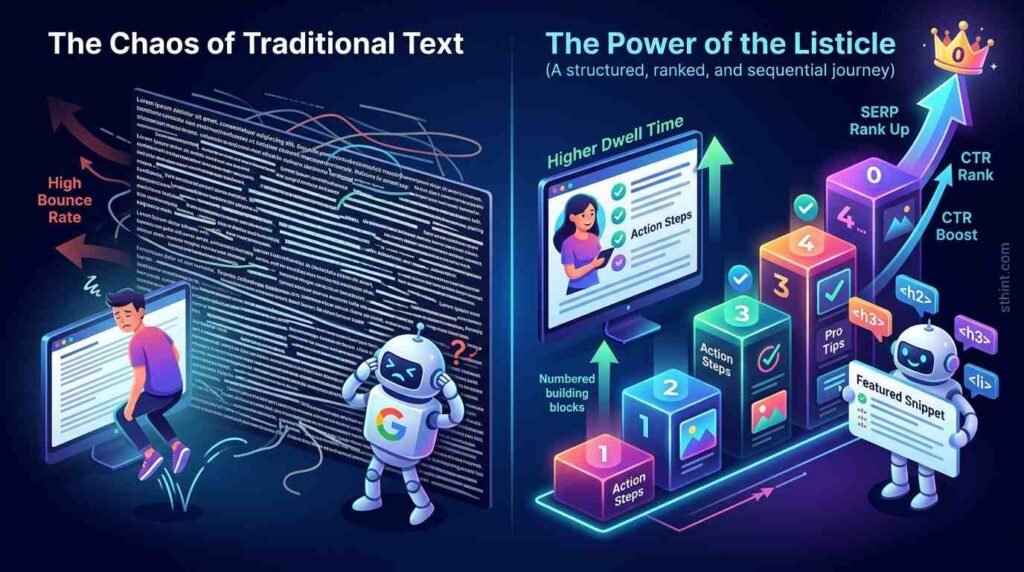
Search engines reward content that satisfies users and is easy to understand. Listicles SEO works because the format naturally matches what ranking systems look for:
- Higher click-through rates (CTR): On a crowded results page, headlines with numbers stand out because they promise organized, skimmable answers.
- Featured snippets (Position 0): Clean heading tags (
<h2>,<h3>) and proper lists (<ol>,<ul>) make it easy for Google to pull your list straight into the snippet box. - Lower bounce rates and longer dwell time: Walls of text push users back to the search results. Short sections and bullet points keep them reading.
- Natural internal and external linking: Each list item is a natural spot to link to a related guide, product or source.
- AI search visibility: AI Overviews and answer engines prefer clearly structured, point-by-point content they can quote and summarize.
Poorly Formatted vs. SEO-Optimized Listicles
The Flawed Approach (Low SEO Value)
Writing long, dense paragraphs under a vague heading like 5 SEO Tips, with no bullet points or separate subheadings, gives search crawlers no structure to understand and gives readers no visual break. It may technically be a list, but it does not behave like one.
The Optimized Approach (High SEO Value)
- Target long-tail intent: Focus on specific, low-difficulty queries, for example keywords with a KD under 30.
- Give each item its own heading: Use an
<h3>for every list item so each point can rank and be scanned on its own. - Optimize images: Compress images to WebP, keep them light, and add descriptive alt text to protect Core Web Vitals.
- Add proof: Include numbers, screenshots or test results under each point instead of generic claims.
Listicle Link Building: Earning Backlinks With List Content
Listicle link building is one of the most practical ways to earn backlinks without cold begging for links. Lists such as “Best SEO Tools,” “Top Marketing Agencies” or “Best Guest Posting Sites” naturally become reference pages that other writers cite when they need a quick roundup.
There are two sides to listicle link building:
- Publishing link-worthy lists: Create data-backed roundups, statistics lists or expert lists on your own site. Bloggers and journalists link to them as a source, and every brand you mention is a potential promoter who may share or link back.
- Getting featured in other listicles: Reach out to sites that already rank for “best” or “top” keywords in your niche and ask to be included. A placement in a ranking listicle brings a relevant backlink plus referral traffic from buyers who are already comparing options.
The key is relevance. A link from a niche-related, high-traffic listicle is worth far more than dozens of links from unrelated pages.
Listicle Ecommerce: Using Lists to Drive Product Sales
Listicle ecommerce content connects informational search with buying intent. Shoppers often search phrases like “best running shoes for beginners” or “top gifts for men under $50” before they decide what to buy. A well-built product listicle meets them at that exact moment.
- Product roundups: Compare several products in one place with pros, cons and ideal use cases.
- Gift guides: Seasonal lists for holidays, birthdays and events that bring in recurring traffic each year.
- “Best for” lists: Group products by need, such as best budget pick, best premium pick and best for small spaces.
- Internal links to product pages: Each list item links to its product or category page, passing both traffic and link equity.
For ecommerce stores, these lists also support category pages, helping them rank by sending strong internal links from content that already earns organic visits.
Real Examples of High-Performing Listicles
Here are common listicle formats that consistently perform well in search:
- Tool roundups: “12 Best Keyword Research Tools for Beginners”, a ranked list that attracts backlinks from SEO blogs.
- Statistics lists: “50 SEO Statistics You Need to Know This Year”, frequently cited by journalists and bloggers as a source.
- How-to steps: “7 Steps to Start a WordPress Blog”, a sequential guide that often wins numbered featured snippets.
- Product guides: “10 Best Budget Smartphones Under $300”, a listicle ecommerce piece with strong buying intent.
- Idea lists: “25 Blog Post Ideas for Small Businesses”, an unranked collection that earns shares and saves.
Step-by-Step Blueprint for Writing High-Ranking Listicles
- Analyze competitors: Review the top-ranking pages for your keyword and plan to offer more depth or more practical value.
- Write a strong headline: Combine your main keyword with a clear number and a benefit or emotional hook.
- Use proper HTML hierarchy: One
<h1>for the title,<h2>tags for main sections and<h3>tags for each list item. - Add E-E-A-T signals: Include real metrics, expert quotes, personal tests or screenshots under each point.
- Start with a direct answer: Put a short summary at the top so both readers and AI search tools get the answer instantly.
- Update regularly: Refresh items, numbers and links so the list stays accurate and keeps its rankings.
Frequently Asked Questions
What is a listicle in simple words?
A listicle is an article written in the form of a numbered or bulleted list, where each point covers one idea, product or step.
What is the listicles meaning in SEO?
In SEO, listicles are list-based articles designed to be scannable and well structured, which helps them earn higher CTR, featured snippets and longer time on page.
Why do listicles perform better than standard essays in organic search?
They match how people scan web pages, use numbered headlines that attract clicks, and have clean HTML structure that search engines can easily turn into featured snippets.
How does listicle link building work?
You either publish useful lists that others link to as a resource, or you get your brand included in existing “best” and “top” listicles in your niche to earn relevant backlinks and referral traffic.
Are listicles good for ecommerce websites?
Yes. Listicle ecommerce content such as product roundups and gift guides targets buyers who are comparing options and sends them directly to product and category pages.
How many items should a high-ranking listicle include?
There is no fixed number. Check the top-ranking pages for your keyword and create a list that is more complete and more useful than theirs.
Do listicles help lower bounce rates?
Yes. Short paragraphs, bold subheadings and bullet points stop readers from bouncing back to search results and encourage them to keep reading.

Muhammad Amjad Butt
SEO Trainer, CEO & Founder of PB Outreach
Muhammad Amjad Butt is an SEO specialist from Faisalabad, Pakistan, practicing SEO since 2006. He is the CEO and founder of PB Outreach and the trainer behind Pak SEO Training. He has trained 500+ students and completed 1,000+ guest posting projects for clients.
📚 Related Posts

Semrush Organic Rankings 2.0 Review: 4 Bugs & Why It Shows 0 Traffic (2026)
Honest Semrush Organic Rankings 2.0 review (2026). Learn how AI-Influenced Traffic, Mentions, and Citations work—plus 4 common bugs causing 0 traffic errors…

How Link Building Agencies Work in 2026 (With Real Agency Case Study)
Discover how link building agencies work behind the scenes—from outreach and publisher networks to pricing. Includes a real case study on Interamplify…
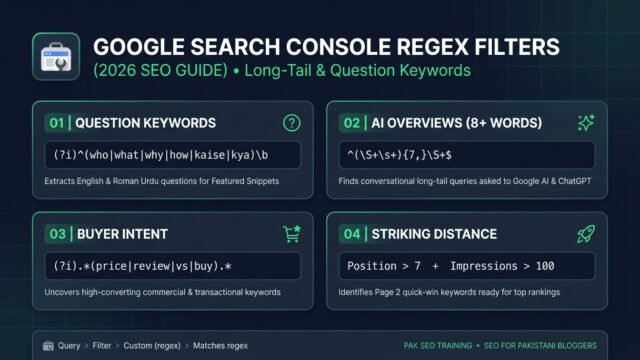
Google Search Console Regex Filters: Find Long-Tail Keywords (2026)
• Learn how to use Google Search Console regex filters to extract long-tail, question, and AI Overview keywords with copy-paste formulas and…