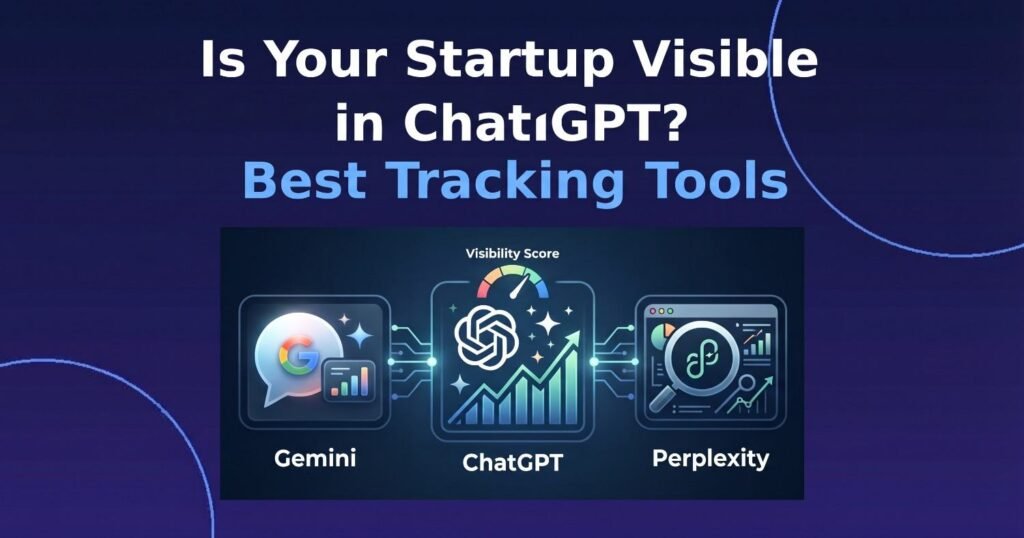
To know if your startup is visible in ChatGPT, you need a tool that runs your customers’ real questions through AI engines on a schedule and records every time your brand is named, ranked or cited. The best tools to track ChatGPT brand mentions for startups are Otterly.AI, LLM Pulse, Peec AI, Profound and Ahrefs Brand Radar. They show whether your business is showing up in ChatGPT, how often, and which competitors appear instead.
Thank you for reading this post, don't forget to subscribe!In this article
- Why AI Visibility Is the New Startup Blind Spot
- How ChatGPT Decides Which Startups to Mention
- Why One Manual Check Tells You Almost Nothing
- The Best Tools to Track ChatGPT Brand Mentions
- The Five Numbers Worth Watching
- Choosing Prompts Without a Big Marketing Team
- The llms.txt File: A Small Step Most Startups Ignore
- Turning Tracking Data Into More Mentions
- Frequently Asked Questions
- Start Tracking Your AI Visibility This Week
If you have ever asked yourself whether your startup is visible in ChatGPT, you are already ahead of most founders. Buyers now ask AI tools for recommendations before they open Google, and many founders have no idea whether their business is showing up in ChatGPT, being ignored or being described wrongly. Finding the best tools to track ChatGPT brand mentions is the first step to fixing that, and this guide shows you exactly where to start.
Why AI Visibility Is the New Startup Blind Spot
When a potential customer types “best invoicing app for freelancers” or “affordable CRM for a five-person team” into ChatGPT, they get a short list of named products, not ten blue links. If your startup is not on that list, you lose the lead before you ever had a chance to compete for it.
The hard part is that you cannot see this happening. Google Search Console shows your impressions and clicks, but no standard dashboard tells you whether your business is showing up in ChatGPT or how often it gets recommended. That is why a new category of AI visibility trackers has appeared, and why the best tools to track ChatGPT brand mentions have become an essential part of a startup’s marketing stack in 2026.
You cannot improve what you cannot see. Most startups are invisible in AI answers simply because nobody on the team has ever checked.
How ChatGPT Decides Which Startups to Mention
ChatGPT does not have a fixed ranking list. It builds each answer from patterns across the web and, when browsing is used, from pages it finds in real time. For a business showing up in ChatGPT answers regularly, three signals usually need to line up:
- Brand presence: your startup is named on multiple trusted third-party websites
- Topic association: your brand is consistently linked to a specific problem or category
- Clear information: your own pages explain what you do and for whom in plain words
Key insight
Brand mentions across the web are one of the strongest AI visibility signals we have data on. An Ahrefs study of 75,000 brands found that web mentions had a 0.664 correlation with visibility in Google AI Overviews. Tracking tools show you which of those mentions are actually turning into AI recommendations.
Why One Manual Check Tells You Almost Nothing
Many founders open ChatGPT, type their category question once and decide they are either “in” or “out”. The problem is that ChatGPT answers change from one run to the next. Your business showing up in ChatGPT in the morning does not mean it will appear for the same prompt in the afternoon.
Manual checks are also affected by your own chat history and memory, so your results may not match what a new customer sees. And testing 30 prompts across ChatGPT, Gemini and Perplexity every week by hand can take two to three hours.
Tracking tools fix this by running each prompt repeatedly from clean sessions, then showing you averages and trends over weeks instead of one random snapshot.
The Best Tools to Track ChatGPT Brand Mentions
The right choice depends on your stage and budget. Prices in this market change often, so always confirm the current plan on the vendor’s website before you buy. The figures below were listed in October 2026.
- Otterly.AI — from about $29/month. Covers ChatGPT, Perplexity, Google AI Overviews and Copilot, with Gemini and AI Mode as add-ons. Best for pre-seed startups testing AI visibility for the first time.
- LLM Pulse — from about €49/month for 50 prompts, with Gemini and Google AI Mode included on base plans. Best value for multi-engine tracking.
- HubSpot AEO — about $50/month in beta, tracking roughly 25 prompts across ChatGPT, Gemini and Perplexity. Best for startups already running on HubSpot.
- Peec AI — from roughly €70–€95/month depending on billing. Strong competitor comparison and unlimited users. Best for seed-stage startups in crowded markets.
- Profound — from about $99/month (billed yearly) for ChatGPT only and 50 prompts. Best for funded startups with a dedicated growth analyst.
- Ahrefs Brand Radar — from $199/month for one AI index, about $699/month for all platforms. Best if your team already uses Ahrefs for SEO.
Do not buy 500 prompts on day one. Start with 20 to 50 prompts, learn which questions actually matter for your business, and scale from there.
Quick Comparison
| Tool | Starting Price | Gemini Included | Best Stage |
|---|---|---|---|
| Otterly.AI | ~$29/mo | Add-on | Pre-seed |
| LLM Pulse | ~€49/mo | Yes | Pre-seed to seed |
| HubSpot AEO | ~$50/mo | Yes | Seed (HubSpot users) |
| Peec AI | ~€70–€95/mo | Add-on | Seed to Series A |
| Profound | ~$99/mo | Higher plans | Series A+ |
| Ahrefs Brand Radar | From $199/mo | Yes | Existing Ahrefs users |
The Five Numbers Worth Watching
A tracking tool can show you dozens of charts, but only a few numbers really matter for a startup:
- Mention rate: the percentage of your tracked prompts where your brand appears
- Average position: whether you are the first recommendation or the fifth
- Sentiment: whether ChatGPT describes you positively, neutrally or negatively
- Cited sources: the websites ChatGPT relies on when it talks about your category
- Share of voice: how often you appear compared with your two or three main competitors
A realistic first goal for a young startup is to move from a 0% mention rate to 10–20% on your core category prompts within 90 days.
Choosing Prompts Without a Big Marketing Team
The biggest tracking mistake is only monitoring your brand name. Most buyers do not know your name yet. They ask problem and category questions. A strong starter set of 20 prompts mixes five types:
- Category: “best project management tool for remote teams”
- Problem: “how to stop missing client deadlines”
- Alternative: “cheaper alternatives to [competitor]”
- Comparison: “[your brand] vs [competitor]”
- Brand: “is [your brand] worth it?”
Quick win this week
Ask your sales or support team for the ten questions customers ask most before buying. Turn each one into a prompt, add five category prompts and five competitor prompts, and you have a 20-prompt tracking list in under an hour. Most tools offer a 7-day free trial, so you can get your first baseline without paying anything.
The llms.txt File: A Small Step Most Startups Ignore
An llms.txt file is a plain-text file placed at the root of your website (yourstartup.com/llms.txt). It gives AI systems a short, clean summary of what your startup does and which pages matter most. Think of it as a one-page brief written for machines instead of humans.
It is a proposed standard and not officially confirmed as a ranking signal by the major AI companies, so treat it as a low-cost extra rather than a guarantee. Still, it takes less than 30 minutes to create, and very few startups have one. A good llms.txt includes:
- A two to three sentence description of what your product does and who it is for
- Your main features or services with short, specific descriptions
- Links to your pricing, product and key comparison pages
- The type of customer and markets you serve
Once it is live, your tracking tool will help you see whether AI answers start describing your startup more accurately over the following weeks.
Turning Tracking Data Into More Mentions
The best tools to track ChatGPT brand mentions only create value when you act on what they show you. Here is how to turn the data into growth:
- Study the cited sources. If ChatGPT keeps citing three review sites and two niche blogs for your category, those are your top targets for listings, guest posts and PR.
- Close competitor gaps. When a rival appears for a prompt and you do not, look at how their pages and third-party mentions are structured.
- Fix wrong information. If ChatGPT gets your pricing or features wrong, update your own pages and the external listings it relies on.
- Lead every page with a direct answer. Clear first paragraphs are easier for AI tools to extract and quote.
- Add schema markup. Organization, Product, Article and FAQPage schema help AI systems understand your content.
According to Google Search Central’s guidance on AI features, there are no special extra requirements to appear in AI Overviews or AI Mode; the same SEO best practices apply. That means your AI visibility work and your regular SEO work support each other.
For a deeper step-by-step guide, read how to rank in AI search results and how to optimize your website for ChatGPT and Perplexity.
Weekly tracking turns “we should be in AI search” into a real feedback loop. Every gap you find becomes the next item on your content and outreach plan.
Frequently Asked Questions
How do I know if my business is showing up in ChatGPT?
Run 10 to 20 questions your customers would ask in a temporary ChatGPT chat, three times each, and note whether your brand appears. For reliable results over time, use a tracking tool such as Otterly.AI, LLM Pulse or Peec AI, which tests your prompts on a schedule and shows your mention rate, position and cited sources.
What is the best tool to track ChatGPT brand mentions for a startup?
For most early-stage startups, Otterly.AI and LLM Pulse are the best starting points because they are affordable and cover several AI engines. Peec AI and Profound suit startups that need deeper competitor data and have a larger budget.
Can one tool track both ChatGPT and Gemini?
Yes. LLM Pulse, HubSpot AEO, Semrush and Ahrefs Brand Radar track both. Otterly.AI and Peec AI offer Gemini as a paid add-on, so check the plan details before buying.
How often should a startup check its ChatGPT visibility?
Weekly is enough for most early-stage startups. Move to daily tracking during product launches, funding announcements or active PR campaigns, when visibility can change quickly.
Is there a free way to track ChatGPT brand mentions?
Yes. Use a temporary or logged-out chat, run 10–15 buyer prompts three times each, and log the results in a spreadsheet every week. Most paid tools also offer a free trial or a one-time free scan for a quick baseline.
How long does it take for a startup to start appearing in ChatGPT?
Startups with existing content and some third-party mentions often see first appearances in 60 to 90 days of focused work. Starting from zero, expect four to six months of consistent content and brand mentions.
What is the biggest mistake startups make when tracking AI mentions?
Tracking only their brand name. Real buyers ask category and problem questions, so those prompts show whether ChatGPT actually recommends you to people who do not know you yet.
Start Tracking Your AI Visibility This Week
Knowing whether your startup is visible in ChatGPT gives you a real head start in 2026, because most competitors still measure only Google rankings and paid ads. Keeping your business showing up in ChatGPT starts with a simple weekly habit:
- Write 20 buyer-style prompts across category, problem, alternative, comparison and brand questions.
- Run a free trial or manual check to record your baseline mention rate.
- Pick one tool that matches your budget and stage.
- List the top 10 sources ChatGPT cites in your category.
- Publish an llms.txt file and add FAQ schema to your key pages.
- Earn mentions on the cited sources and review your numbers every week.
The startups that ChatGPT recommends six months from now are the ones measuring and improving their visibility today. Start this week.